Thirst is a late messenger. By the time your mouth feels dry, your body has often been signalling for a while in quieter ways. Mild dehydration does not make headlines or send people to the hospital, but it can quietly colour the day with fatigue, headaches and irritability.

What Is Mild Dehydration?
Dehydration occurs when you lose more fluid than you take in. Mild dehydration, often defined as a loss of one to two percent of body weight in fluid, can occur through sweat, heat, illness, busy days, caffeine or simply forgetting to drink. Studies suggest that even mild fluid deficits may affect concentration, mood and perceived energy in some people.
8 Signs You Might Be Ignoring
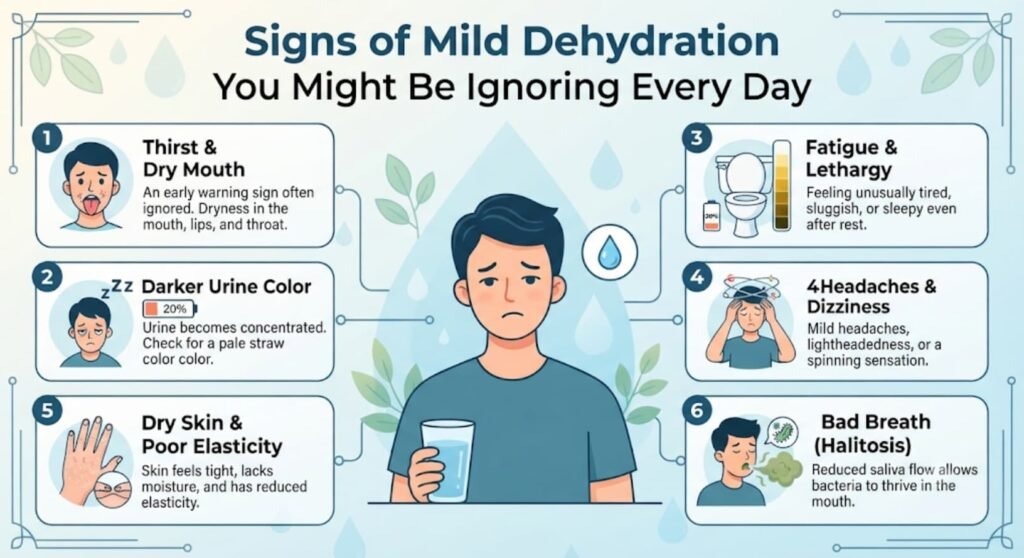
1. Darker Urine
Pale straw colour usually indicates good hydration. Darker yellow or amber suggests you may need more fluid. (Note that some foods, vitamins and medications also change urine colour.)
2. Persistent Fatigue
Feeling sluggish for no clear reason can be linked to low fluid intake, among many other possible causes.
3. Headaches
Some people experience headaches when dehydrated. Drinking water can sometimes help, though headaches have many causes.
4. Dry Mouth, Lips or Skin
Dry lips and a sticky mouth are classic signs. Skin may feel less supple.
5. Difficulty Concentrating
Brain fog and trouble focusing may accompany mild dehydration.
6. Constipation
Fluid helps keep stool soft. Low intake, along with low fibre, can contribute to constipation.
7. Muscle Cramps
Fluid and electrolyte loss, especially during exercise or heat, can contribute to cramps.
8. Cravings and Dizziness
Some people notice sweet cravings. Light-headedness on standing can occur when fluid volume is low.
How Much Should You Drink?
Needs vary by body size, climate, activity, health and diet. A commonly cited guide is about 2.7 litres of total fluid per day for women and 3.7 litres for men, including water from food and other beverages. Many people meet this without counting. The “eight glasses” rule is a handy guideline, not a law.
Simple Ways to Stay Hydrated
- Start your day with a glass of water.
- Keep a bottle where you can see it.
- Eat water-rich foods like cucumber, watermelon, oranges and soups.
- Flavour water with lemon, mint or berries.
- Drink a glass with each meal.
- Match your intake to heat and activity. Add electrolytes if you are sweating heavily for long periods.
- Check your urine colour as a rough guide.
Who Needs Extra Care?
- Older adults, whose thirst signals may be dulled.
- Young children and infants.
- People who exercise intensely or work outdoors.
- Pregnant and breastfeeding women.
- Anyone with vomiting, diarrhoea or fever.
- People on certain medications such as diuretics.
Can You Drink Too Much?
Yes. Excessive water intake, especially in a short time, can dilute blood sodium (hyponatraemia), which is dangerous. Drink to thirst and sensible habits rather than forcing large volumes.
When to Seek Medical Help
Seek care promptly for confusion, rapid heartbeat, fainting, very dark urine, inability to keep fluids down or signs of heat illness. Persistent excessive thirst may signal a medical condition such as diabetes and should be evaluated.
The Takeaway
Your body is generous with small signals. Notice the headaches, the fatigue, the dark urine, and respond with a glass of water and a handful of juicy fruit. Hydration is a quiet kindness you can offer yourself dozens of times a day.
This article is for general information and inspiration only. It is not medical advice and does not diagnose, treat or prevent any condition. If you have a health condition, are pregnant, or take medication, please speak with a qualified healthcare professional before changing your diet, supplements, sleep or exercise routine.