Long hours at a desk have a way of rearranging the body. Shoulders creep toward the ears, the head drifts forward like a ship leaning into the wind, and by mid-afternoon the neck feels like a tightly wound rope. The remedy is not a perfect posture but frequent, gentle movement.

Why Neck and Shoulder Tension Happens
Staying in one position for long periods, looking down at screens and holding the arms forward can overload the muscles of the neck, upper back and shoulders. Stress also encourages us to tense those muscles unconsciously. Research suggests that regular movement breaks and exercise can reduce discomfort for many office workers, though the best posture is often described as “the next one”, meaning that variety matters more than any single position.
Before You Stretch
- Move gently and stop if you feel sharp pain, numbness, tingling or dizziness.
- Breathe slowly and never bounce.
- Hold each stretch for 20 to 30 seconds and repeat two to three times.
- If you have a neck injury, chronic pain or medical condition, check with a healthcare professional first.
6 Simple Desk Stretches
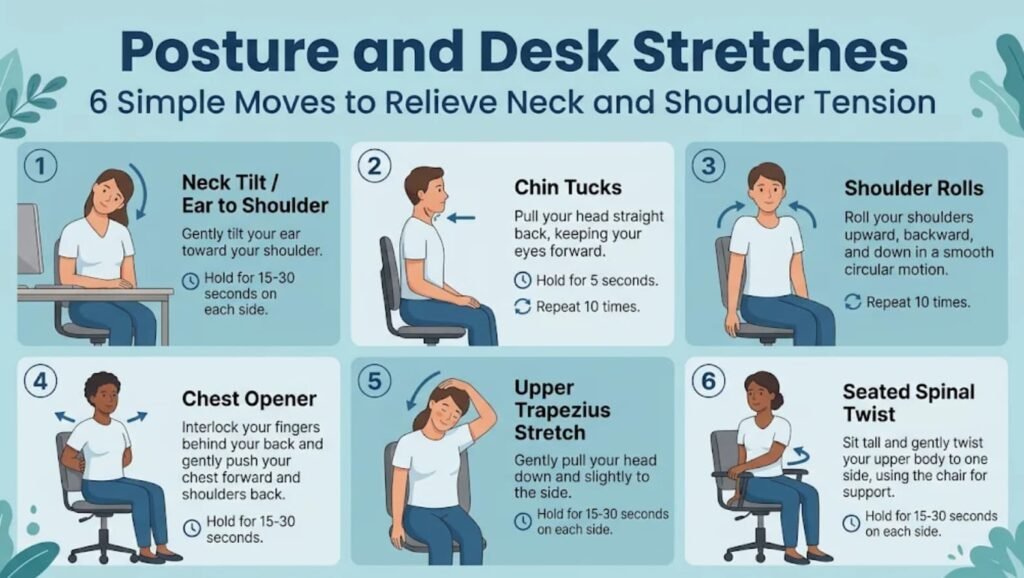
1. Neck Side Tilt
Sit tall. Gently lower your right ear toward your right shoulder, keeping the left shoulder relaxed. Hold, then switch sides. For a deeper stretch, rest your hand lightly on your head without pulling.
2. Chin Tuck
Look straight ahead and gently draw your chin back as if making a double chin. Hold for five seconds and release. This counteracts the forward-head position.
3. Shoulder Rolls
Lift your shoulders toward your ears, roll them back and down in slow circles. Do eight to ten repetitions, then reverse.
4. Upper Trapezius Stretch
Sit on your right hand to stabilise the shoulder. Tilt your head gently to the left and slightly forward. Hold and switch.
5. Seated Thoracic Extension
Interlace your hands behind your head, open your elbows and gently arch your upper back over the top of the chair. Breathe into the chest.
6. Doorway Chest Opener
Stand in a doorway, place your forearms on the frame at shoulder height and step forward gently until you feel a stretch across the chest. Tight chest muscles pull the shoulders forward.
Make Movement a Habit
- Set a timer to stand or stretch every 30 to 60 minutes.
- Pair stretches with routine tasks: after calls, before lunch, at the end of emails.
- Walk during phone conversations.
- Take a two-minute breath break and release your jaw and shoulders.
Set Up Your Workspace
- Place your monitor at eye level, about an arm’s length away.
- Keep elbows at roughly 90 degrees, with wrists neutral.
- Support your lower back and keep your feet flat.
- Use a headset or speaker for long calls instead of cradling the phone.
- Raise your laptop on a stand and use an external keyboard if possible.
Strength Matters Too
Stretching helps, but strengthening supports posture over time. Rows, wall angels and gentle resistance exercises build upper-back strength. A few sessions a week can make a difference. Regular walking, swimming or yoga also supports the spine and shoulders.
When to Seek Help
See a doctor or physical therapist if pain radiates down an arm, causes numbness or weakness, follows an injury, wakes you at night or does not improve with self-care.
The Takeaway
The best desk stretch is the one you actually do. Make it small, make it frequent and let your body remind you that it was designed to move. A few mindful minutes can loosen the tension and bring you back to the work, and to yourself, a little lighter.
This article is for general information and inspiration only. It is not medical advice and does not diagnose, treat or prevent any condition. If you have a health condition, are pregnant, or take medication, please speak with a qualified healthcare professional before changing your diet, supplements, sleep or exercise routine.