
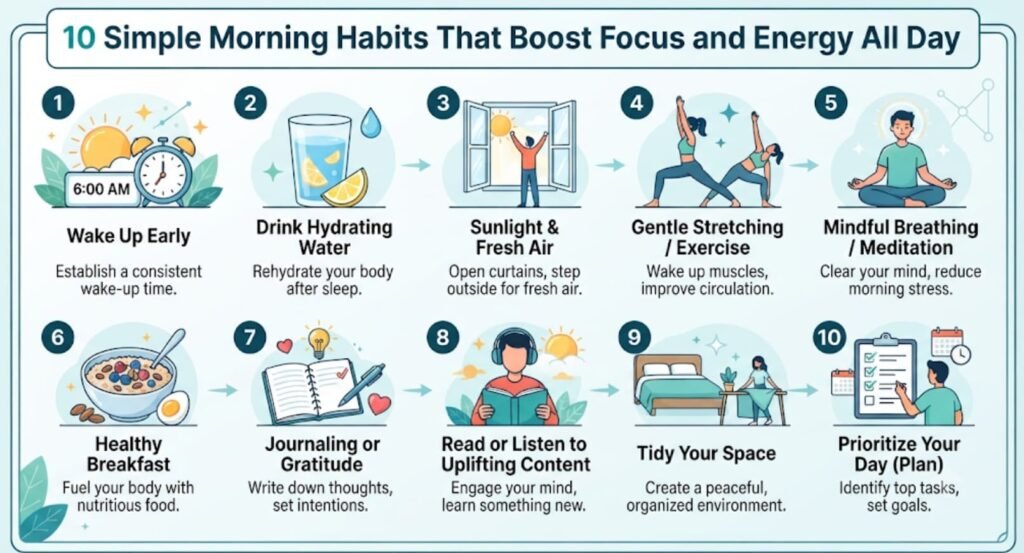
Mornings are a quiet kind of architecture. The first hour of the day lays foundations for everything that follows, not through grand gestures, but through small, repeated decisions. The habits below are modest by design. They are drawn from sleep, nutrition and behavioural research and tuned for real life.

1. Wake at a Consistent Time
A regular wake time anchors your circadian rhythm, which supports alertness and sleep quality.
2. Drink a Glass of Water
After several hours without fluids, many people are mildly dehydrated. A glass of water is a simple way to start the day, and some studies suggest even mild dehydration may affect concentration and mood.
3. Get Natural Light
Step outside or sit by a bright window for 5 to 15 minutes. Morning light helps set your body clock, boosts alertness and is associated with better sleep at night.
4. Move Your Body
A few minutes of gentle stretching, a short walk or a handful of squats increases circulation and can improve mood.
5. Delay the Phone
Reaching for your phone immediately can flood your attention with other people’s priorities. Try delaying email and social media for 20 to 30 minutes.
6. Eat a Balanced Breakfast
Protein, fibre and healthy fats help steady energy. Think eggs and whole-grain toast, Greek yogurt with berries and nuts, or oatmeal with seeds. If you are not hungry in the morning, a smaller snack is fine.
7. Take a Few Minutes to Breathe
Two to five minutes of slow breathing or mindfulness can create a calm start. Research suggests that even brief mindfulness practice can reduce perceived stress for some people.
8. Plan Your Top Three
Write down the three tasks that matter most. Research on implementation intentions shows that planning when and how you will do something increases the likelihood of follow-through.
9. Do the Hardest Task First
If your energy is highest in the morning, use it for deep work before meetings and messages take over.
10. Be Careful With Caffeine
Coffee and tea can be wonderful. Many people find they feel better having coffee 60 to 90 minutes after waking, once natural cortisol has peaked, though the evidence for this timing is limited. Avoid caffeine in the late afternoon to protect sleep.
Build a Routine That Fits You
Start With One or Two Habits
Trying to change everything at once usually fails. Choose one habit and attach it to something you already do, such as drinking water while the kettle boils.
Make It Easy
Place your water glass by the sink. Lay out your clothes the night before.
Track Gently
A simple tick on a calendar is plenty. Missing a day is not a failure.
What If You Are Not a Morning Person?
Chronotype is partly genetic. If you are a night owl, you may find early mornings harder. Focus on a consistent schedule, bright light after waking and a gentle start rather than forcing a perfect routine.
The Takeaway
Mornings do not need to be glamorous to be meaningful. A glass of water, a bit of daylight, a few deep breaths and a plan for the day are enough to change how the hours unfold.
This article is for general information and inspiration only. It is not medical advice and does not diagnose, treat or prevent any condition. If you have a health condition, are pregnant, or take medication, please speak with a qualified healthcare professional before changing your diet, supplements, sleep or exercise routine.