
Anyone who has tossed off the blankets at 2 a.m. knows that temperature is not a trivial detail of sleep. It is one of the quiet architects of the night. Our bodies are designed to cool slightly as we drift off, and the room around us can either help that process or work against it.

Why Temperature Matters
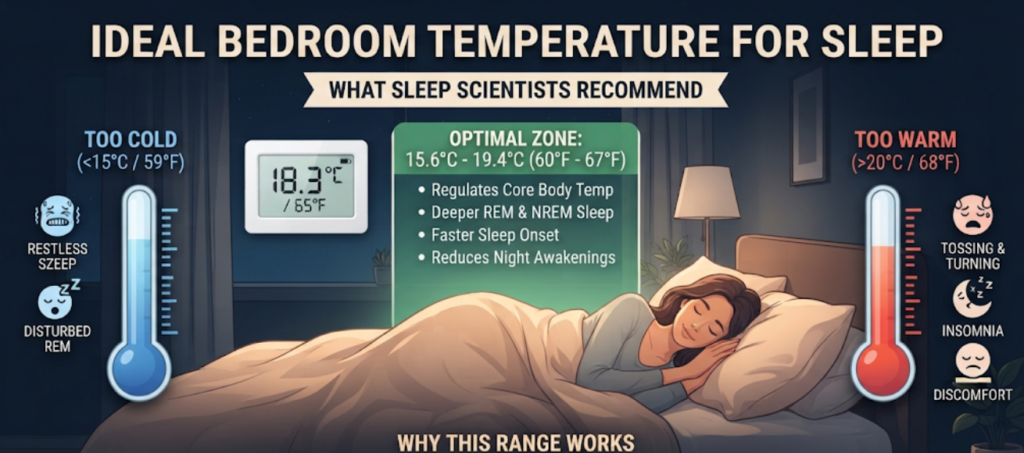
As bedtime approaches, your core body temperature begins to decline, reaching its lowest point in the early morning hours. This cooling is part of the biological signalling that helps you fall and stay asleep. A bedroom that is too warm can interfere with the process, while one that is too cold can cause discomfort and waking.
What Sleep Experts Recommend
Many sleep organisations suggest a bedroom temperature of roughly 15 to 19 degrees Celsius (about 60 to 67 degrees Fahrenheit) for most adults. Some people sleep best slightly outside this range. Research on how heat affects sleep, including studies of hot nights, shows that warmer conditions are linked with more wakefulness and lighter sleep.
A Starting Point, Not a Rule
- Most adults: 16 to 19 degrees Celsius.
- Babies and infants: Guidelines often suggest around 16 to 20 degrees Celsius, with appropriate light clothing and a safe sleep setup. Follow paediatric advice.
- Older adults: May prefer slightly warmer rooms for comfort.
Always adjust to your own comfort and health needs.
It Is Not Only the Air
Bedding
Choose breathable fabrics such as cotton, linen or bamboo. Layer blankets so you can remove or add as needed.
Pyjamas
Loose, lightweight cotton is generally more comfortable than heavy synthetics.
Mattress and Pillow
Some foam mattresses retain heat. If you tend to overheat, a cooling mattress topper or breathable pillow may help.
Simple Ways to Cool Your Bedroom
- Close curtains during the day to keep sun out.
- Open windows in the evening when the air cools.
- Use a fan to circulate air.
- Take a warm shower one to two hours before bed. The subsequent cooling of your skin and body can support sleep.
- Keep electronics out of the bedroom, since they emit heat and light.
- If you have air conditioning, set a gentle temperature rather than a blast of cold.
If You Are Always Cold
- Wear socks. Warm feet help blood vessels dilate and can help you fall asleep.
- Use a hot water bottle before bed, then remove it.
- Layer a blanket over your duvet.
Humidity and Airflow
Very dry or very humid air can affect comfort. A modest humidity level of around 40 to 60 percent is usually comfortable. Good ventilation also helps.
Safety Note
Do not use heating pads or electric blankets in ways that risk burns or overheating, especially for people with reduced sensation or for children. For infants, avoid overbundling.
When It Is Still Hard to Sleep
If you sleep in a cool room and still wake often, consider other factors: caffeine, alcohol, stress, hormonal changes or medical conditions. Persistent sleep disruption deserves attention from a healthcare professional.
The Takeaway
A cool, dark, quiet room is one of the simplest invitations to good sleep. Experiment gently within the recommended range, notice how you feel in the morning and let your own body be the final judge.
This article is for general information and inspiration only. It is not medical advice and does not diagnose, treat or prevent any condition. If you have a health condition, are pregnant, or take medication, please speak with a qualified healthcare professional before changing your diet, supplements, sleep or exercise routine.