You did everything right. You went to bed at a reasonable hour, lay under the covers for eight hours, and yet your alarm drags you out of a fog. It is a maddening experience, and it is far more common than people admit. The explanation is often not the quantity of sleep, but its quality, timing and the conditions around it.

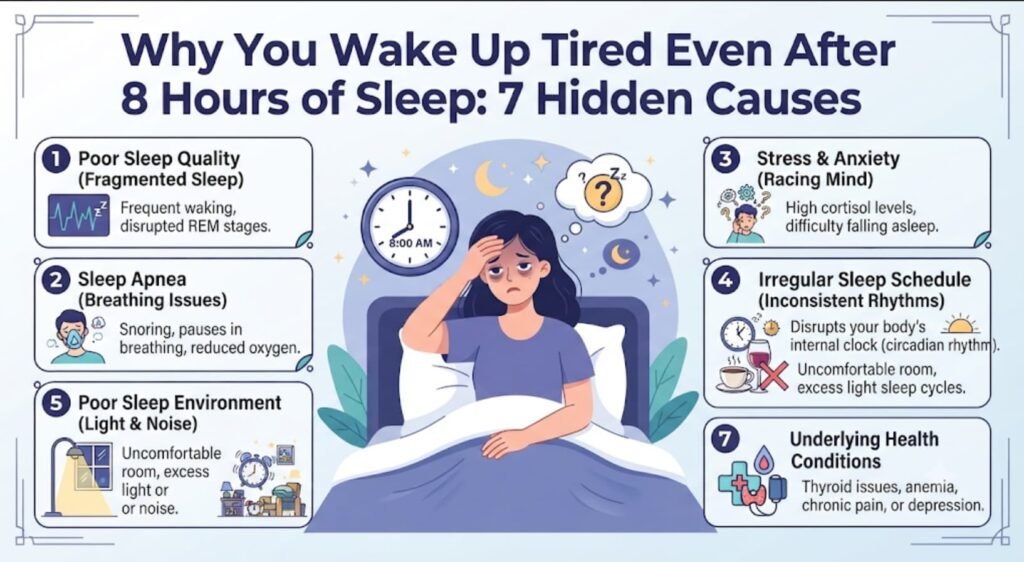
1. Fragmented Sleep
You may be spending eight hours in bed but not sleeping all of them. Frequent awakenings, even brief ones you do not remember, can reduce the restorative quality of sleep. Noise, light, a warm room, pets, partners or a full bladder may be to blame.
2. Irregular Sleep Schedule
Shifting bedtimes and wake times, particularly large weekend differences, can create what researchers call social jet lag. Your body clock struggles to settle, and you feel groggy as a result.
3. Alcohol and Late Caffeine
Alcohol may help you fall asleep but tends to disturb the second half of the night. Caffeine late in the day can delay sleep onset and reduce deep sleep, even if you fall asleep eventually.
4. Sleep Disorders
Obstructive Sleep Apnea
Repeated pauses in breathing can fragment sleep and leave you exhausted. Loud snoring, gasping, morning headaches and daytime sleepiness are common signs. It is diagnosed with a sleep study and is treatable.
Restless Legs and Periodic Limb Movements
An urge to move the legs or repetitive leg jerks at night can disrupt sleep.
If you suspect a sleep disorder, speak with a healthcare professional.
5. Sleep Inertia
The grogginess you feel right after waking, known as sleep inertia, can last from a few minutes up to an hour or more. It is more intense if you are woken from deep sleep or are sleep-deprived. Bright light, a glass of water and gentle movement can help you shake it off.
6. Stress, Anxiety and Low Mood
Worry and depression can alter sleep architecture and leave you unrefreshed. Persistent low mood, loss of interest or anxiety deserves professional support, not just better pillows.
7. Medical and Nutritional Factors
Anaemia, thyroid conditions, vitamin D deficiency, diabetes, chronic pain, certain medications and other conditions can cause fatigue. A doctor can order simple tests if your tiredness persists.
What You Can Try
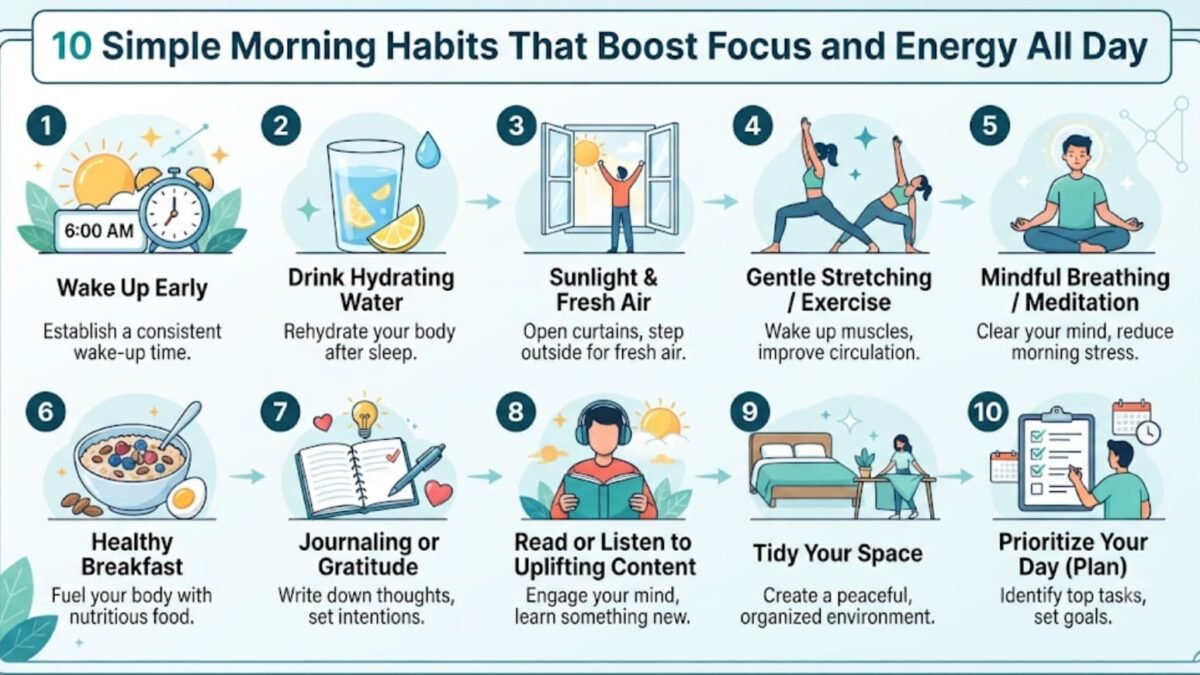
- Keep a regular schedule, with consistent wake time as the anchor.
- Get morning daylight.
- Limit alcohol and late caffeine.
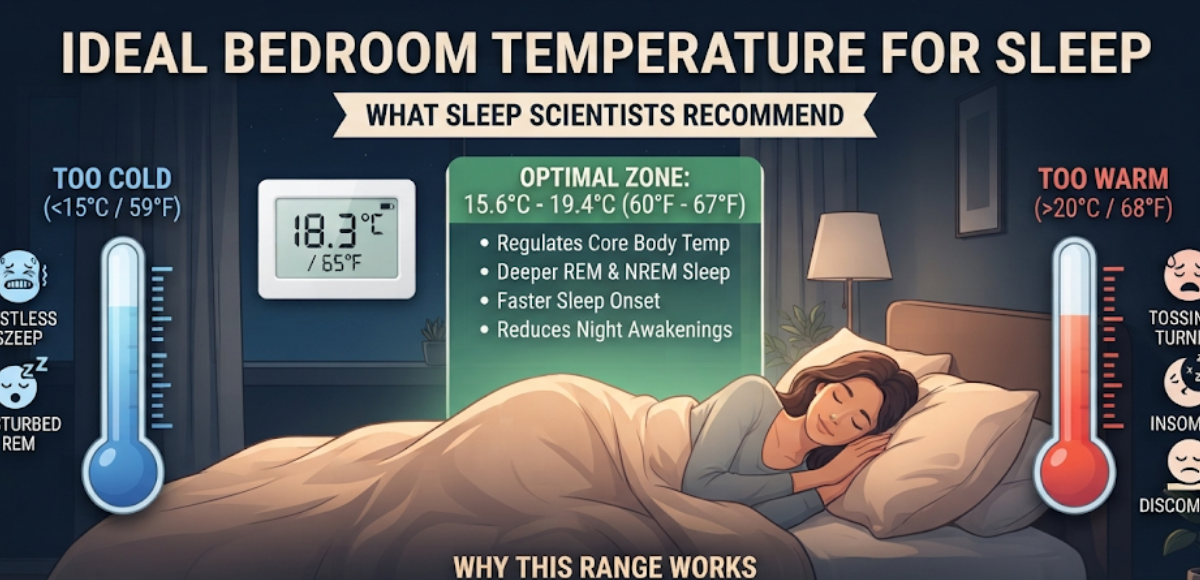
- Keep the bedroom dark, cool and quiet.
- Avoid big meals and screens close to bedtime.
- Keep a sleep diary for two weeks to spot patterns.
- Seek help if tiredness continues.
A Brief Story
Carla slept eight hours a night but dragged herself through every morning. She assumed it was stress. After a snoring partner mentioned she sometimes stopped breathing, she saw a doctor and was diagnosed with sleep apnea. With treatment, her mornings changed. The lesson is not that every tired person has apnea, but that persistent fatigue is worth investigating.
The Takeaway
Eight hours in bed is not always eight hours of rest. Look at consistency, environment, habits and health. A little detective work, with professional help when needed, can turn heavy mornings into lighter ones.
This article is for general information and inspiration only. It is not medical advice and does not diagnose, treat or prevent any condition. If you have a health condition, are pregnant, or take medication, please speak with a qualified healthcare professional before changing your diet, supplements, sleep or exercise routine.