Magnesium has acquired something of a halo in sleep circles, whispered about in tea shops and supplement aisles. It is a real and important mineral, involved in hundreds of reactions in the body, including nerve function, muscle relaxation and energy production. But what does it actually do for sleep, and how much should you take?

What Magnesium Does
Magnesium helps regulate neurotransmitters and supports muscle relaxation. It also plays a role in the body’s stress response. Because it is involved in so many processes, a deficiency can contribute to symptoms such as muscle cramps, fatigue and irritability, though true deficiency is less common in healthy individuals who eat a balanced diet.
What Research Says About Sleep
Studies are modest and mixed. Some small trials, particularly in older adults, suggest magnesium supplementation may improve sleep quality or ease insomnia symptoms. Others find little effect. Evidence is stronger for correcting low intake than for boosting sleep in people who already get enough. Magnesium is best seen as a supportive nutrient rather than a sleeping pill.
How Much Do You Need?
Recommended dietary allowances for adults are roughly 310 to 320 milligrams per day for women and 400 to 420 milligrams for men, with variation by age and life stage. For supplements, the upper limit set by US health authorities is 350 milligrams per day, since higher doses may cause diarrhoea and stomach upset.
Food Sources
Food is the safest place to begin.
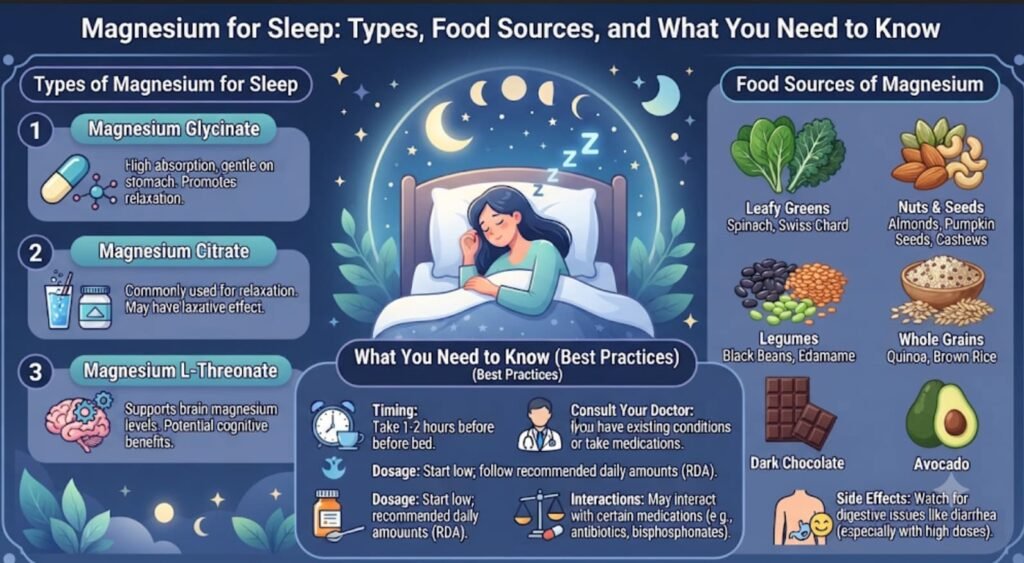
- Pumpkin seeds: One of the richest sources.
- Almonds, cashews and peanuts.
- Spinach and Swiss chard.
- Black beans, lentils and chickpeas.
- Whole grains such as brown rice, oats and quinoa.
- Dark chocolate in modest amounts.
- Avocado and bananas.
- Tofu and edamame.
Common Supplement Types
Magnesium Glycinate
Magnesium bound to glycine, an amino acid. Generally gentle on the stomach and popular for evening use.
Magnesium Citrate
Well absorbed and relatively inexpensive, but can have a laxative effect in higher doses.
Magnesium Oxide
Common and cheap, but poorly absorbed. Often used for constipation rather than raising magnesium levels.
Magnesium Threonate
Marketed for brain health. Research is preliminary.
Magnesium Sulfate (Epsom Salts)
Used in baths. Evidence that skin absorbs meaningful amounts is limited, though a warm bath itself is relaxing.
Safety Considerations
- People with kidney disease should not supplement without medical advice, since magnesium can accumulate.
- Magnesium can interact with certain antibiotics, bisphosphonates, diuretics and other medications.
- Pregnant or breastfeeding individuals should speak with their clinician.
- Start with a low dose and increase slowly if advised.
Practical Tips
- Prioritise magnesium-rich meals during the day, especially dinner.
- If you use a supplement, choose a reputable brand tested by a third party.
- Take it with food if it upsets your stomach.
- Combine it with a calming routine, not as a stand-alone fix.
When to Look Beyond Magnesium
If you have persistent insomnia, breathing pauses, restless legs or mood changes, a nutrient alone is unlikely to be the answer. Seek professional guidance.
The Takeaway
Magnesium is a worthy mineral, essential and widely found in whole foods. It may gently support sleep for some people, particularly those with low intake. But no single nutrient replaces a consistent schedule, a calm evening and a healthy lifestyle.
This article is for general information and inspiration only. It is not medical advice and does not diagnose, treat or prevent any condition. If you have a health condition, are pregnant, or take medication, please speak with a qualified healthcare professional before changing your diet, supplements, sleep or exercise routine.