
Somewhere in your digestive tract, trillions of microorganisms are going about their business. Together they are known as the gut microbiome, and they influence digestion, immune function and possibly more. Scientists are still mapping the details, but one message is consistent: what you eat shapes the community inside you.

The Basics of Gut Health
A healthy gut generally means regular, comfortable digestion and a diverse microbiome. Diets rich in plant fibre are consistently linked with greater microbial diversity. A large citizen-science study found that people who ate more than 30 different plant foods per week had more diverse gut bacteria than those who ate 10 or fewer. This does not prove cause and effect, but it is an appealing, practical idea.
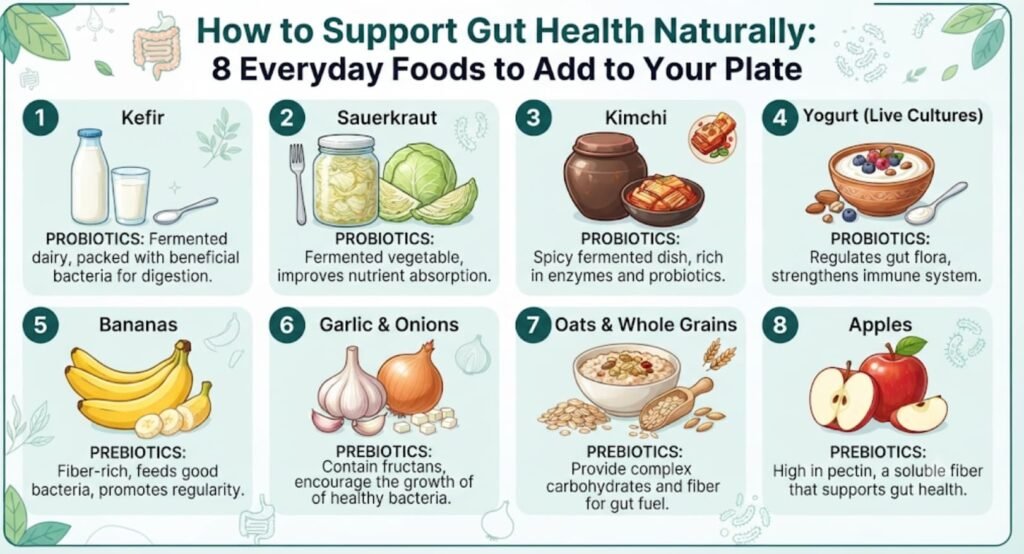
8 Everyday Foods to Add to Your Plate
1. Yoghurt and Kefir
Fermented dairy products contain live cultures. A clinical study from Stanford found that a diet high in fermented foods increased microbiome diversity and reduced markers of inflammation in healthy adults.
2. Kimchi, Sauerkraut and Other Fermented Vegetables
Look for “live” or “unpasteurised” products refrigerated in the shop, since heat kills the cultures. Start with small portions, as they can be salty.
3. Oats
Oats contain beta-glucan, a soluble fibre that feeds beneficial bacteria and supports healthy cholesterol levels.
4. Legumes
Lentils, chickpeas and beans are rich in fibre and resistant starch. Introduce them gradually if you are not used to them, and rinse canned beans.
5. Onions, Garlic and Leeks
These alliums contain prebiotic fibres such as inulin and fructooligosaccharides. They also add flavour to nearly everything.
6. Berries
Berries provide fibre and polyphenols, plant compounds that gut bacteria can metabolise.
7. Bananas, Slightly Green
Less ripe bananas contain resistant starch, which ferments in the colon and feeds helpful bacteria.
8. Whole Grains
Brown rice, barley, rye and whole-wheat bread deliver fibre and varied nutrients.
A Day on a Gut-Friendly Plate
- Breakfast: Oatmeal with berries, seeds and a spoon of yoghurt.
- Lunch: Lentil and vegetable soup with whole-grain bread.
- Snack: A banana and a handful of almonds.
- Dinner: Stir-fried vegetables with garlic and brown rice, plus a side of kimchi.
Tips for Success
- Increase fibre slowly. Sudden jumps can cause gas and bloating.
- Drink enough water. Fibre needs fluid to do its job.
- Aim for variety. Different fibres feed different bacteria.
- Chew well and eat mindfully.
- Move and sleep well. Exercise and good sleep are also associated with healthy gut function.
What About Probiotic Supplements?
Evidence suggests that specific strains may help certain conditions, such as antibiotic-associated diarrhoea, but benefits are strain-specific and not universal. Food-based approaches are a good first step. Ask a clinician before using supplements, especially if you have a compromised immune system.
When to See a Doctor
Persistent abdominal pain, blood in stool, unexplained weight loss, ongoing diarrhoea or constipation, or difficulty swallowing need medical evaluation. Digestive symptoms can have many causes, and food alone cannot diagnose or treat them.
The Takeaway
Supporting gut health is less about a single superfood and more about a pattern: plenty of plants, some fermented foods, patience and variety. Add one new plant food to your plate this week and let your microbes do the rest.
This article is for general information and inspiration only. It is not medical advice and does not diagnose, treat or prevent any condition. If you have a health condition, are pregnant, or take medication, please speak with a qualified healthcare professional before changing your diet, supplements, sleep or exercise routine.