There is a peculiar tiredness that has nothing to do with physical effort. It lives behind the eyes and in the temples, and it comes from hours of looking at glowing rectangles while the mind skips between tabs, alerts and endless streams. The cure is not to abandon technology, but to build a more deliberate relationship with it.

What Screen Fatigue Actually Is
Prolonged screen use is associated with digital eye strain: dry or tired eyes, blurred vision, headaches and neck or shoulder tension. Mental fatigue, sometimes called “mental clutter,” arises from constant switching between tasks and notifications. Research links heavy, unplanned phone use with higher stress for some people, though the relationship is complex and depends on how technology is used.
Why a “Detox” Is Really a Reset
The word detox is borrowed from medicine, but a digital detox does not remove toxins. It is simply a pause that lets attention recover. Think of it as a reset rather than a purification.
7 Practical Ways to Reduce Screen Fatigue
1. Follow the 20-20-20 Rule
Every 20 minutes, look at something about 20 feet (6 metres) away for 20 seconds. Eye-care professionals recommend this to reduce eye strain.
2. Adjust Your Workspace
Place your screen about an arm’s length away, with the top at or slightly below eye level. Reduce glare and match screen brightness to the room.
3. Turn Off Non-Essential Notifications
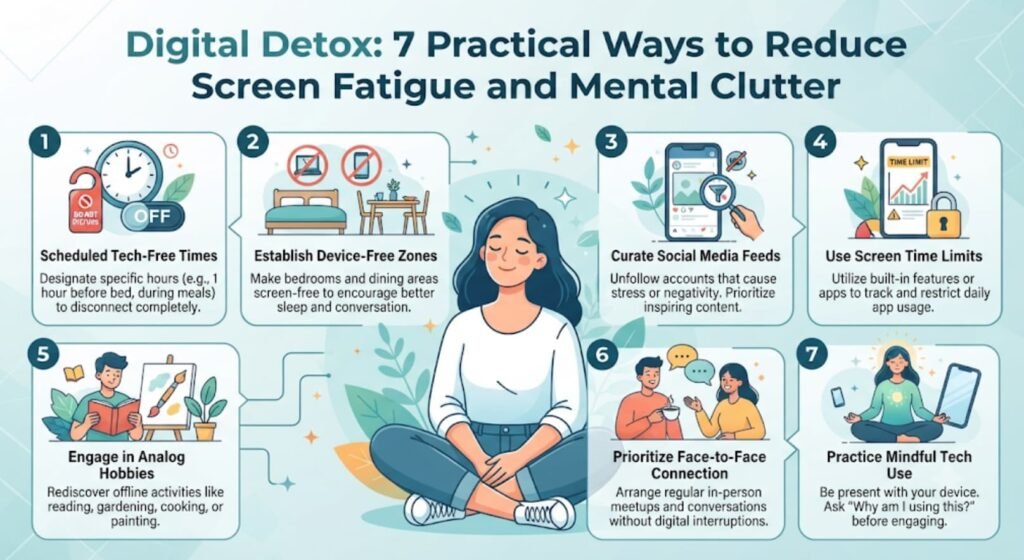
Keep alerts for people and tasks that truly matter. Silence the rest. Fewer interruptions make deep focus easier.
4. Create Phone-Free Zones and Times
Choose the dining table, the bedroom or the first hour of the morning to be screen-free. Charge your phone outside the bedroom if you can.
5. Batch Your Messages
Instead of checking email constantly, set two or three times a day. This reduces context switching.
6. Replace Scrolling With Something Tangible
Read a paper book, cook, garden, sketch, call a friend. Aim for activities that engage your hands and senses.
7. Take Real Breaks Outdoors
Step outside for ten minutes. Daylight, distance viewing and movement help eyes and mind.
A Gentle Plan for the First Week
- Day 1: Track how much time you spend on your phone.
- Day 2: Turn off non-essential notifications.
- Day 3: Start a 30-minute screen-free window before bed.
- Day 4: Try a phone-free meal.
- Day 5: Take a screen-free walk.
- Day 6: Experiment with a morning without your phone.
- Day 7: Reflect on what helped and what to keep.
Common Obstacles
- Work demands: Use boundaries and communicate availability.
- Fear of missing out: Notice the feeling without acting on it. It usually passes.
- Habit loops: Replace the habit with a small alternative, such as a stretch or sip of water.
A Few Notes on Wellbeing
Screens are not inherently bad. They connect us with loved ones and offer learning and creativity. The aim is mindful use. If you notice persistent anxiety, depression or an inability to cut back despite wanting to, consider talking with a mental health professional.
The Takeaway
A little less screen can make room for a little more life. Try one small change this week and notice what returns: perhaps focus, perhaps a better night’s sleep, perhaps the simple pleasure of a quiet room.
This article is for general information and inspiration only. It is not medical advice and does not diagnose, treat or prevent any condition. If you have a health condition, are pregnant, or take medication, please speak with a qualified healthcare professional before changing your diet, supplements, sleep or exercise routine.