
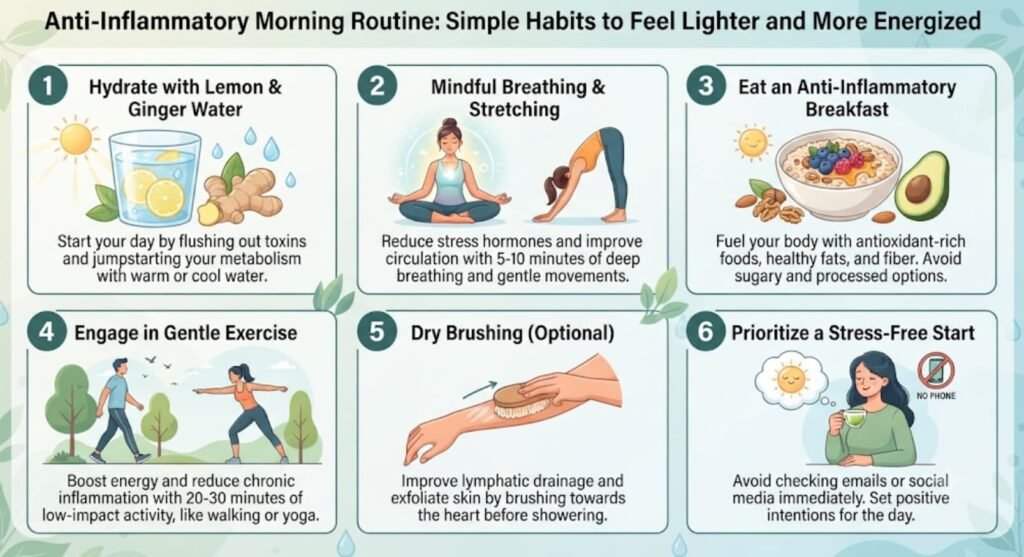
Some mornings you wake feeling like a well-oiled machine. Other mornings, a dull heaviness seems to follow you into the kitchen. While there is no single habit that can banish that feeling, research suggests that lifestyle choices influence inflammation in the body, and a thoughtful morning can set a supportive tone.

What Is Inflammation, Really?
Inflammation is the immune system’s natural response to injury or infection, and it is essential for healing. Chronic low-grade inflammation, however, has been linked in research with conditions such as heart disease and type 2 diabetes. Diet, sleep, stress, physical activity and body composition all influence inflammatory markers. Be wary of products or programmes that claim to “cure” inflammation. The goal is support, not a quick fix.
Habits That Support a Calmer Morning
1. Start With Water
Hydration supports every system in the body. A glass of water, perhaps with a slice of lemon, is a gentle beginning.
2. Get Daylight and Gentle Movement
Morning light reinforces circadian rhythm, and regular physical activity is associated with lower inflammatory markers. A ten-minute walk or a few stretches are enough to begin.
3. Eat an Anti-Inflammatory Style Breakfast
Patterns such as the Mediterranean diet are associated with lower markers of inflammation. At breakfast, try:
- Oats topped with berries, walnuts and flaxseed.
- Greek yoghurt with fruit and chia seeds.
- Eggs with spinach and whole-grain toast.
- A smoothie with leafy greens, berries and a spoon of nut butter.
4. Add Colour
Brightly coloured fruits and vegetables supply polyphenols and carotenoids. Aim to put at least two colours on your plate.
5. Choose Healthy Fats
Olive oil, nuts, seeds and fatty fish like salmon provide unsaturated fats, including omega-3s, associated with heart and metabolic health.
6. Season With Herbs and Spices
Ginger, turmeric (with black pepper), cinnamon and garlic are flavourful additions. They are tasty, but they are not substitutes for medical treatment.
7. Practise a Moment of Calm
Chronic stress is linked with higher inflammatory activity. Two to five minutes of slow breathing, gratitude journaling or simple mindfulness can ease the transition into the day.
8. Keep Sleep Consistent
Poor or short sleep is associated with higher inflammatory markers. A regular schedule supports everything else.
What to Minimise
Ultra-processed foods high in refined sugar, sweetened drinks and excessive alcohol are linked with increased inflammation in observational studies. You do not need perfection. Gradual swaps, such as water for soda or fruit for sweets, add up.
A Sample 20-Minute Morning
- Drink a glass of water.
- Step outside for five minutes of light and gentle stretching.
- Take three minutes for slow breathing.
- Prepare a colourful breakfast and eat it seated.
When to See a Doctor
Persistent joint pain, swelling, unexplained fatigue, fever or digestive symptoms deserve medical attention. Inflammatory conditions such as arthritis and inflammatory bowel disease require professional care.
The Takeaway
Feeling lighter and more energised is rarely about one dramatic intervention. It grows from small, repeated acts of care: water, light, movement, colour and calm. Begin with a single habit, make it enjoyable, and let the rest follow gently.
This article is for general information and inspiration only. It is not medical advice and does not diagnose, treat or prevent any condition. If you have a health condition, are pregnant, or take medication, please speak with a qualified healthcare professional before changing your diet, supplements, sleep or exercise routine.