Open your curtains and something ancient happens. Light enters the eye, travels to a small cluster of brain cells and tells the entire body what time it is. We often treat sunlight as scenery, but for the human body it is also information, a daily signal that shapes sleep, hormones, alertness and mood.

How Light Talks to the Body
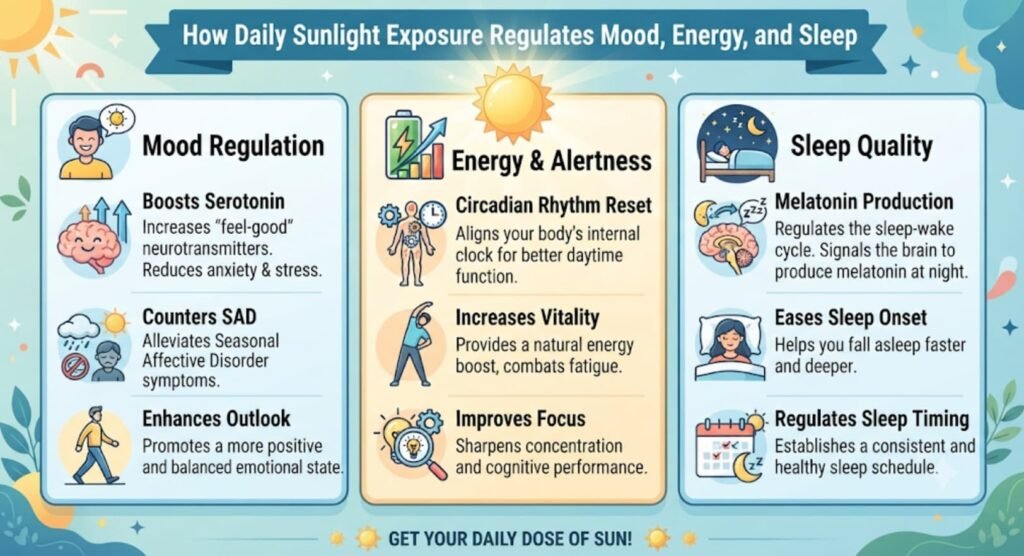
Special light-sensitive cells in the retina, called intrinsically photosensitive retinal ganglion cells, respond strongly to bright, blue-enriched daylight. They send signals to the suprachiasmatic nucleus, the body’s master clock, which helps coordinate circadian rhythms: sleep and wake cycles, body temperature, hormone release and more.
Sunlight and Sleep
Morning light helps anchor your circadian rhythm and is associated with falling asleep earlier and sleeping more soundly at night. In contrast, little daytime light combined with bright evenings may delay your body clock. People who spend more time in bright natural light during the day often report better sleep quality in studies.
Sunlight and Mood
Light exposure is associated with mood, and bright light therapy is an established treatment for seasonal affective disorder under medical guidance. In everyday life, spending time outdoors is linked with lower stress and better wellbeing in many studies, though factors like exercise, nature and social contact also play a role. Sunlight is one contributor among several.
Sunlight and Energy
Bright light, particularly in the morning, increases alertness. Many people find that a short walk outdoors boosts focus more reliably than another cup of coffee.
What About Vitamin D?
Skin produces vitamin D when exposed to ultraviolet B radiation. Vitamin D supports bone health and immune function. How much sun you need depends on skin tone, latitude, season, time of day and sunscreen use. Many people also get vitamin D from foods such as fatty fish, eggs and fortified products, or from supplements when recommended by a clinician.
How to Get Healthy Light Exposure
- Aim for morning light: Spend 10 to 30 minutes outdoors within an hour or two of waking. On cloudy days, outdoor light is still far brighter than indoor light.
- Move your workspace near a window.
- Take lunch or a walk outside.
- Open curtains early.
- Dim the lights in the evening to contrast with the bright day.
Sun Safety Matters
Too much ultraviolet radiation increases the risk of skin damage and skin cancer. Practise sun-smart habits:
- Avoid prolonged midday exposure in strong sun.
- Use sunscreen, protective clothing and sunglasses as appropriate.
- Seek shade when the UV index is high.
- Do not use tanning beds.
- Talk with a dermatologist about any changes in moles or skin.
Morning light is gentle and effective for circadian benefits without the intensity of midday sun.
Special Situations
- Winter and low-light climates: A bright window, outdoor walks and, if recommended by a clinician, light therapy lamps can help.
- Night shift workers: Light timing is more complex. Consult an occupational health professional.
- Eye health: Never stare directly at the sun.
The Takeaway
Sunlight is a free, daily gift that tunes the body to the rhythm of the day. A short morning outing, a bright window and a respectful approach to sun safety can support mood, energy and sleep. Step outside tomorrow and let the light do some quiet work.
This article is for general information and inspiration only. It is not medical advice and does not diagnose, treat or prevent any condition. If you have a health condition, are pregnant, or take medication, please speak with a qualified healthcare professional before changing your diet, supplements, sleep or exercise routine.